
Photodynamic Therapy 101 – FAQs Answered By Your Dermatology Team
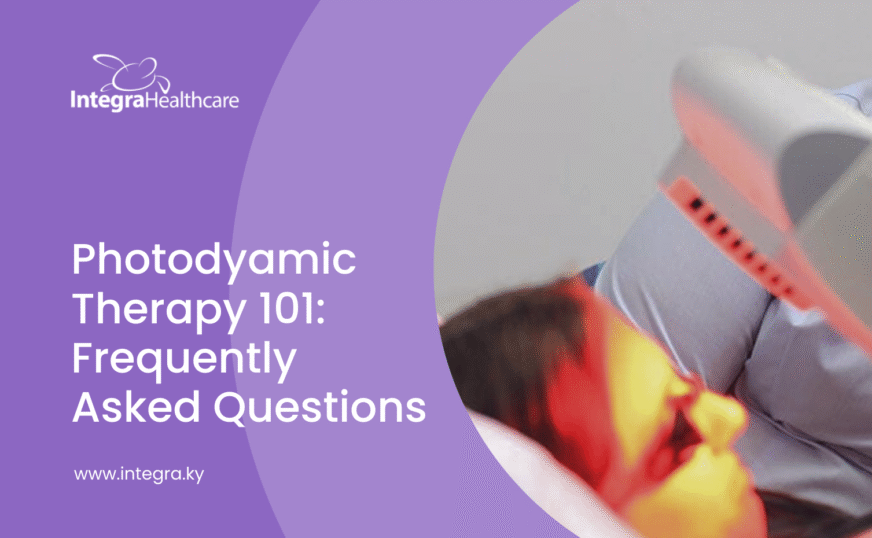
Integra’s Dermatology team is proud to introduce Photodynamic Therapy (PDT) as a new service available at our state-of-the-art clinic in the Cayman Islands. Performed by our expert, board-certified dermatology team, PDT is a cutting-edge, non-invasive treatment designed to target sun-damaged skin, acne, actinic keratosis, and certain types of skin cancer. With a strong commitment to clinical excellence and patient safety, Integra offers personalized care using the latest dermatological advancements to help you achieve healthy, radiant skin.
1. What is Photodynamic Therapy (PDT)?
Photodynamic Therapy (PDT) is a non-invasive skin treatment that uses a combination of a light-sensitive drug (photosensitizer) and a specific light wavelength to target and destroy abnormal or damaged skin cells. It is commonly used to treat actinic keratosis, sun-damaged skin, acne, and some types of skin cancer.
2. What skin conditions does PDT treat?
PDT is used to treat several dermatological conditions, including:
- Actinic keratosis (precancerous skin lesions)
- Basal cell carcinoma (early-stage, superficial)
- Acne vulgaris (moderate to severe acne)
- Sun damage and photoaging
- Sebaceous hyperplasia and other benign lesions
3. How does Photodynamic Therapy work?
During a PDT session, a photosensitizing agent is applied to the skin and allowed to absorb into abnormal cells. After a specified incubation time, the area is exposed to a specialized light source that activates the agent, destroying the targeted cells while minimizing damage to surrounding healthy tissue.
4. Is Photodynamic Therapy safe?
Yes, PDT is a safe and FDA-approved treatment for many dermatological conditions. Side effects are generally mild and may include redness, swelling, or temporary skin sensitivity. At Integra.ky, treatments are performed by trained dermatology professionals in a clinical setting.
5. What can I expect during a PDT session at Integra Dermatology?
Each session typically involves:
- A thorough skin assessment by a dermatology specialist
- Application of the photosensitizing agent (e.g., aminolevulinic acid)
- An incubation period (usually 1–3 hours)
- Exposure to a specific blue or red light source
- Post-treatment care and sun-avoidance instructions
6. How many Photodynamic Therapy sessions are needed?
The number of sessions depends on your condition and skin response. Many patients with actinic keratosis or acne see significant improvement after 1–2 sessions, while others may require follow-up treatments for best results.
7. What is the downtime after a PDT treatment?
Most patients experience mild redness and peeling for a few days after treatment. Avoiding sun exposure is critical for 48–72 hours post-treatment, as the skin will be more sensitive to light. Full recovery typically occurs within 7–10 days.
8. Is PDT effective for treating acne?
Yes, PDT is increasingly used as an alternative treatment for moderate to severe acne. It works by reducing oil production, killing acne-causing bacteria, and shrinking sebaceous glands. Patients often see long-term improvement in acne symptoms.
9. Does Photodynamic Therapy help with sun damage and aging?
Absolutely. PDT can rejuvenate sun-damaged skin by targeting abnormal cells, reducing pigmentation, and improving skin texture. It’s commonly used for patients with extensive sun exposure history, especially in tropical climates like the Cayman Islands.
10. How do I book a Photodynamic Therapy consultation with Integra in the Cayman Islands?
To schedule a PDT consultation, visit www.integra.ky or call us directly. Our dermatology team will assess your skin and create a personalized treatment plan suited to your needs.
You may also like to read…

Integra Healthcare Launches Consultant-Led Ophthalmology Service in Grand Cayman, Led by Dr Brenda Mulenga
Integra Healthcare has launched a new consultant-led Ophthalmology service, offering residents of the Cayman Islands comprehensive specialist eye care, from…
In the News: Integra Healthcare & Diabetes Eye Health
We’re proud to share recent media coverage highlighting Integra Healthcare’s commitment to specialist, patient-centred care in the Cayman Islands. In…

Virtual Lactation Support. Yes, It Actually Works.
By Katy Teasdale, RN, BSN, IBCLC When people hear “virtual lactation support,” they often picture a grainy video call and…