
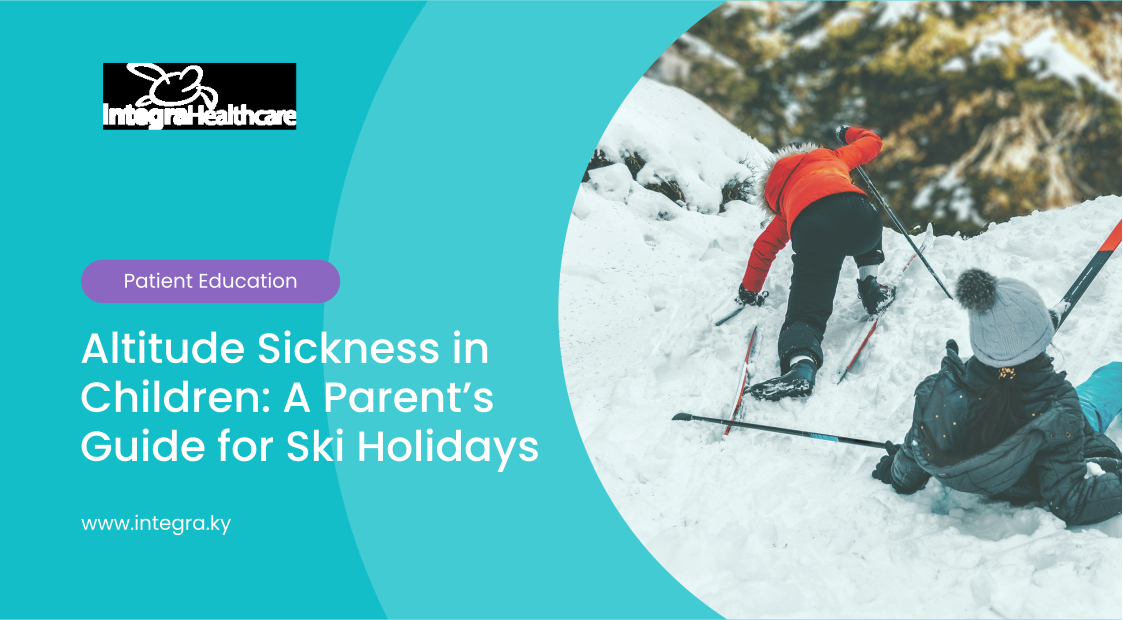
Altitude Sickness in Children: A Parent’s Guide for Ski Holidays
Paediatric Travel Health Advice from Integra Healthcare
Planning a family ski holiday this winter? Many popular ski resorts are located at high altitude (above 2,500 metres / 8,000 feet), where oxygen levels are lower and the risk of altitude sickness in children and adults increases.
Dr Daniel Langer, Consultant Paediatrician at Integra Healthcare, with an expertise in travel medicine, explains what parents need to know about altitude illness, symptoms, prevention and when to seek medical help.
What Is Altitude Sickness?
Altitude sickness (also called altitude illness or acute mountain sickness) occurs when the body struggles to adjust to reduced oxygen levels at higher elevations.
Anyone can be affected — even healthy, fit adults and children.
You are at higher risk if you:
- Travel to destinations above 2,500m
- Fly or drive directly from sea level to a high ski resort
- Increase altitude quickly without rest days
Altitude Sickness Symptoms in Children
Symptoms often appear within 6–24 hours of arriving at altitude.
Mild Altitude Sickness (Acute Mountain Sickness – AMS)
- Headache
- Tiredness or fatigue
- Dizziness
- Nausea or vomiting
- Loss of appetite
- Poor sleep
Serious Altitude Illness (Medical Emergency)
- High Altitude Cerebral Edema (HACE) – swelling of the brain
- Severe headache
- Confusion or unusual behaviour
- Loss of balance
- Extreme drowsiness
High Altitude Pulmonary Edema (HAPE) – fluid in the lungs
- Breathlessness (especially at rest)
- Persistent cough
- Weakness
- Blue lips or fingernails
If a child develops breathing difficulty, confusion, or difficulty walking, descend immediately and seek urgent medical care.
How to Prevent Altitude Sickness on a Ski Holiday
Preventing altitude illness is far easier than treating it.
Practical Prevention Tips for Families
- Ascend gradually where possible
- Spend 1–2 nights at a lower altitude before skiing higher
- Take it easy for the first 48 hours
- Encourage children to drink plenty of fluids
- Avoid over-exertion early in the trip
- Adults should avoid alcohol
- Ensure adequate warm clothing
Home remedies such as garlic, ginkgo or coca products do not prevent altitude sickness.
Which Ski Resorts Are High Risk for Altitude Illness?
Many ski resorts in Colorado, the Canadian Rockies, Switzerland, France and Italy have lift systems reaching well above 2,500–3,000 metres.
Examples include:
- Breckenridge and Telluride (Colorado, USA)
- Banff and Lake Louise (Canada)
- Zermatt, Verbier (Switzerland)
- Val Thorens, Chamonix, Les Deux Alpes (France)
- Cervinia and Monterosa (Italy)
Even if your accommodation is below 2,500m, skiing during the day at higher elevations can still trigger symptoms.
Resorts in Japan, Australia and New Zealand are generally at lower altitudes and carry a much lower risk.
Do Children Need Altitude Medication (Diamox)?
Most families do not require altitude medication.
However, speak to your GP or paediatrician before travel if:
- You are travelling above 2,500–3,000m
- You are going directly to high altitude without rest days
- A parent or child has previously experienced altitude sickness
- Your child is very young and may struggle to describe symptoms
- You are staying somewhere remote with limited medical access
Acetazolamide (Diamox) may reduce symptoms but:
- Must be started before ascent
- Is not suitable for all children
- Does not replace gradual ascent
- Does not prevent emergencies
- Severe symptoms always require descent
When to Go Lower
If mild symptoms develop:
- Rest
- Drink fluids
- Use simple pain relief
- Do not ascend further
If symptoms worsen or serious signs appear, descend immediately. Going to a lower altitude can be life-saving.
Paediatric Travel Health Advice at Integra Healthcare
Dr Langer provides specialist paediatric travel consultations for families travelling abroad, including:
- Pre-ski holiday altitude advice
- Travel advice for babies and young children
- Children with asthma or underlying medical conditions
- Travel during pregnancy
- Vaccine planning
- Preventative medication guidance
We recommend booking a pre-travel consultation 2–3 months before departure, as some vaccines require time to become effective and certain medications may have limited availability.
Book a Pre-Travel Appointment
If you are planning a family ski holiday and would like expert advice on altitude sickness prevention in children, contact Integra Healthcare’s Paediatric Department to arrange a consultation.
Early planning helps ensure a safe, healthy and enjoyable trip to the mountains.
You may also like to read…

Integra Healthcare Launches Consultant-Led Ophthalmology Service in Grand Cayman, Led by Dr Brenda Mulenga
Integra Healthcare has launched a new consultant-led Ophthalmology service, offering residents of the Cayman Islands comprehensive specialist eye care, from…
In the News: Integra Healthcare & Diabetes Eye Health
We’re proud to share recent media coverage highlighting Integra Healthcare’s commitment to specialist, patient-centred care in the Cayman Islands. In…
Virtual Lactation Support. Yes, It Actually Works.
By Katy Teasdale, RN, BSN, IBCLC When people hear “virtual lactation support,” they often picture a grainy video call and…